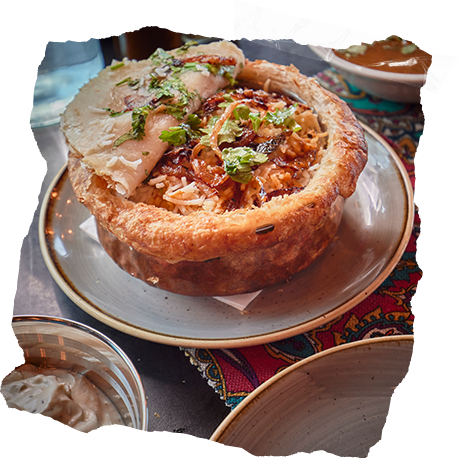
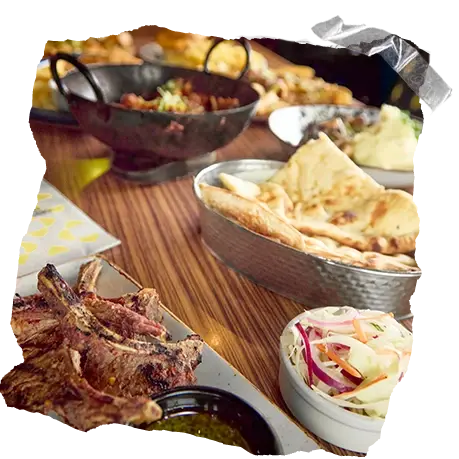
The feeling those dishes produce is not imaginary, and it is not simply a matter of taste. Familiar, rich food activates the brain’s reward system, prompting the release of dopamine, the chemical associated with pleasure and motivation. Carbohydrate-dense dishes encourage serotonin production, which stabilises mood and reduces the physiological effects of stress. The body is not simply being fed. It is being regulated.
Smell is the most direct route into this response. The olfactory system connects to the limbic region of the brain, responsible for emotion and long term memory, more directly than any other sense. A spiced broth, slow cooked meat, bread pulled from a tandoor: these do not simply register as pleasant. They retrieve something. They pull a feeling from somewhere in the memory and place it in the room before the meal has properly started.
This is why eating out reaches deeper than the food itself. The setting, the smell, the company all carry weight that the dish alone could not contain.
Psychology of Comfort Food and What Memory Does to a Meal
Research into emotional eating consistently finds that comfort food choices are driven less by nutritional preference and more by autobiographical memory. People do not crave a dish because of how it performs in isolation. They crave what eating it makes them feel, and that feeling is built from years of association.
This is also why comfort food resists substitution in a way that adventurous eating does not. A technically superior version of the same dish, made by someone unfamiliar in an unfamiliar setting, rarely produces the same effect. The emotional ingredient is not something a recipe contains. It is contributed by the eater, and it only activates when the right conditions are met.
Cultural Comfort Foods and Why the Lahori Tradition Carries This Well
Comfort food is not a fixed list of dishes. It is a function that food serves, and that function looks different depending on where you grew up and what your family cooked. The ingredient that all comfort food shares across cultures is not a spice or a technique. It is time: the signal that someone made this slowly, for a reason, for you.
The Lahori cooking tradition embodies this more completely than most. Spices are layered in sequence. Meat is cooked until it yields rather than being pushed to done. Sauces are reduced until the flavour concentrates into something that cannot be hurried into existence. The comfort is not added at the end. It is built into the method from the start.
Nostalgia and Food in British Asian Cooking
For British Asian communities, comfort food carries the weight of two food cultures at once. The flavours of origin sit alongside the tastes absorbed from growing up in the UK. A Doodh Patti Chai alongside a Yorkshire tea. A lamb karahi shared with people whose idea of comfort food looks entirely different. These are not contradictions. They are the natural result of a life lived between two kitchens, and they produce a version of comfort that is richer for the layering.
Food carries generations forward in a way that language sometimes cannot. A recipe passed through kitchens and across cities carries everything it was ever made with: the person who first cooked it, the occasion it was made for, the version of home it was tied to. All of that arrives at the table alongside the food itself.
Community Food Traditions and Why the People Around the Table Matter